The Canterbury Fair
By Lisa Carlson,
Canterbury Fair chair or co-chair since 1994
with help from
“The Canterbury Fair 1959-1999” by Robert Lockwood and David Tirrell-Wysocki
On the last Saturday in July, all roads lead to Canterbury Center!
It’s time for the Canterbury Fair.
The Fair evolved from an agricultural event hosted by the Canterbury Farmers and Mechanics Association from 1871 to 1883. It was a two-day event to showcase local livestock, crafts and farm products.

Since the 1950s, it has been a popular, one-day, old-fashioned country fair, complete with farm animals that honor the town’s agricultural heritage as a farming community. Thousands attend the family-friendly event that features arts, crafts, skilled demonstrations, food, a road race, music and more – all fueled by thousands of hours of work by scores of volunteers that highlight Canterbury’s community spirit.
The Canterbury Fair as we know it began in 1959 when the Canterbury Ladies Benevolent Society added a chicken barbecue to the “Canterbury Country Fair and Bazaar” that it had been sponsoring for several years. The organization devoted much of its energy in the late 40s early 50s to raising money to rebuild the Parish Hall that had been destroyed by the fire in 1943 that burned most of the Center. Its series of summer fairs, bazaars, street sales and church suppers eventually became the Fair.
In his history of the Canterbury Fair, long-time Fair volunteer Bob Lockwood noted an irony: the demise of the original 19th Century event was due in part to the increased popularity of the Grange, which had broader agricultural purposes than the Fair’s goal of promoting interest in agriculture. And he noted that the Fair’s growth in the 1950s was due in part to the fire that started in the Center building where the Grange met.
By 1963, Fair crowds had gotten so large that four station wagons were enlisted as jitneys to shuttle people to and from various parking locations. The cars were jammed and people sat on the lowered tailgates.

Artisan and goods tables were arranged under a huge tent in the Center, covering the area where the bandstand now sits. People lined up outside the tent for the Fair to start, Bob wrote. “It was like a large department store basement or fire sale.”

In 1964, an antique car donated by a resident was auctioned off, and for years, the auction, run by George Peverly, and later by his son, Foster, was a highlight and often included antique fire engines.
Logistically, the Canterbury Fair and Auction, as it was called, had become too much for the Benevolent Society to handle alone. In 1966, other Canterbury organizations and the Canterbury United Community Church joined in, sharing Fair proceeds with a newly created Canterbury Fund, which still exists to provide scholarships and aid for family emergencies in town.
Each year brought its own memories and introduced new traditions.

Generations of Fifes and Fifields have run the frappe bar that first appeared in 1974.
In his history, Bob Lockwood offered a colorful account of how the tradition of starting the Fair with a cannon began in 1975. Concord resident John Brennan, a Revolutionary War buff, brought a cannon to the Center. He set it off at 9 a.m.
“The noise was so loud it rattled windows throughout the Center, made people jump, spill their coffee, drop their hot dogs, startled any and all animals in the vicinity and caused some near heart attacks,” Bob wrote.
After a moment of stunned silence, the cannoneer conceded he would “have to cut back on the charge, a little, next time.”
Bob wrote that Fair organizers decided future blasts would be preceded by warnings and a countdown on the loudspeaker. Years later, the cannon was retired and the Fair began with the ringing of the church bell.
The year 1975 also saw the introduction of Morris Dancers and the Canterbury Country Dance Orchestra, led by Canterbury fiddler and raconteur Dudley Laufman – another tradition that continues.

Dudley Laufman, far right, with Fair musicians, late 1990s.
Long-time resident Mary Kerwin remembers being part of a crew organized by Lois Booth that made pizzas in the town garage for many years.
“We gathered to chop fresh vegetables on Friday,” she said recently. “On Fair Day, we had several stoves lined up along the back of the garage. Hot. We sold the pizzas as fast as we could make them.”
Fair attendance was estimated at 10,000 people in 1981, its peak year.

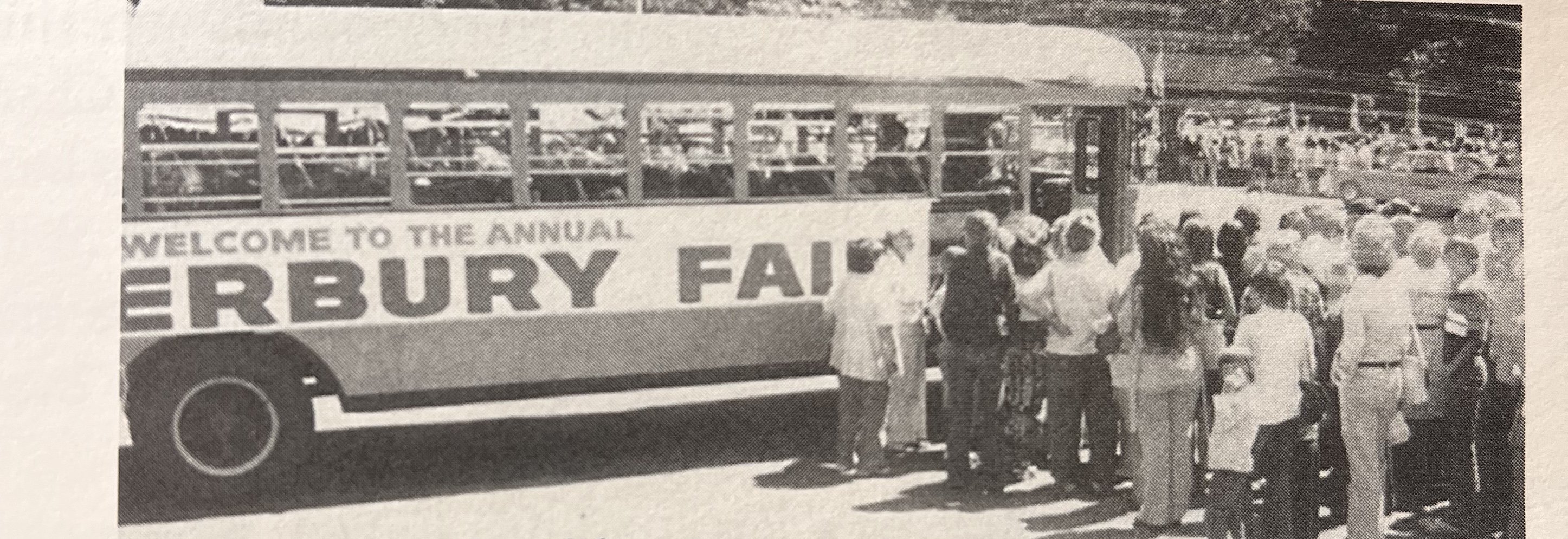
In 1991, the Fair was held at Shaker Village, which provided much support, logistical assistance and a beautiful backdrop. It returned to the Center the following year.
Over the years, there have been multiple discussions about whether to continue the Fair. But continue, it has, and on the last Saturday of this month, it all happens again for the 68th Canterbury Fair.

As usual, in the wee hours of Fair morning, long before the bell rings, the Sunset Mountain Fish and Game Club starts cooking chicken on long racks over a huge bed of glowing charcoal.

Spectators line both sides of Center Road through the Center to watch runners young and old kick off the Fair with the Woodchuck Classic 5K Road race and the shorter Chipmunk Classic on backcountry dirt road routes.
Juried craftspeople bring varieties of giftable offerings to a day filled with wonderful music and delectable foodstuffs that include the chicken barbeque, food trucks and bake sale tent featuring Shaker hand pies of many fruited varieties, fruit cups, ice cream and the frappe bar.
Fair Day is geared toward families, offering face-painting, old-fashioned games, obstacle courses and children’s entertainments.
The Fair also features old farm equipment and machinery, as well as wood turners and a blacksmith. Spinners and weavers show how wool gets from sheep to shawl.
Town Hall hosts the abundant What Not Sale, a complete over exuberance of things none of us need, but take home anyway. Another popular tradition is the wondrous Book Sale, sometimes held in the Meeting House and library front porch, now in a barn in the Center.
And to pique interest in the town’s history, the Canterbury Historical Society offers an exhibit and tours of its one-room Schoolhouse and a special display from its archives in its museum at the former Elkins Library.
The Fire Department brings a firetruck for kids of all ages to marvel over. The Police Department also is part of Fair Day, protecting walkers and offering directions to drivers navigating detours around the Fair or searching for parking. Officers also have been known to help over-abundant shoppers loading off or on our shuttles and to assist in corralling heifer escapees!
The Fair continues to gather the community and to ensure that Canterbury has a meeting hall by directing proceeds to maintain the Parish House Community Center. It now houses a daycare center and hosts church and community meetings, yoga and exercise classes, receptions, musical programs and other entertainment.
Fair proceeds also support book awards for Canterbury students going off to college. And donations continue to be made to the Canterbury Fund, a unique financial resource for our community.
None of this would happen without Fair volunteers. Each year, calls go out for assistance in planning, setting up and taking down The Fair. And each year, much like Camelot, setup starts Friday morning promptly at 9. By mid-afternoon, tents, tables, chairs and signage are in place to greet fair-goers the next morning.
As the crowds leave at the end of Fair Day, volunteers jump back into action and by 8 pm, booths, tables and other Fair essentials are tucked away in an old barn, the charcoal pit is cooling, the Parish Hall kitchen has been scrubbed within an inch of its life and the grounds have been tidied of little bits. It is as if Fair Day was just a wish.
The Fair holds a lifetime of generations of families participating. From its inception to present day, rock-solid commitments keep the intentions and old-fashioned ways of Canterbury’s Fair intact. We count on each other to show up — and show up we do.
See you at the Fair – Always the Last Saturday in July!